Friday, 4 March 2016

Waka-Into-Bondage:The Last 3/4 Mile

DEMOCRAZY
    by 
Bisi Silva

February 2008


Normal circumstances dictate that contact between peoples and cultures result in an enriching exchange that leaves each party more knowledgeable.  This had been the case to a greater extent with Africa’s encounter with other cultures. Between the 10th and 14th century, the Trans-Saharan trade in gold and salt between North and West Africa resulted not only in economic prosperity for both regions but in lasting social and cultural exchange. This changed over 500 years ago when one of humanities greatest and longest atrocities began; the transatlantic slave trade which resulted – according to experts calculations - in the loss of up to 21 million Africans captured, enslaved, killed or died.

Whilst there is no denying that slavery existed long before the arrival of the Europeans, as a result of tribal wars and by Arab traders plying the Trans-Saharan trade routes these were predominantly for domestic purposes. Whereas James Valvin observes that West Africa was turned by the Europeans into ‘a creeping zone of coastal slave trading to feed the appetite for slave labour in the Atlantic islands and Portugal.’[1] The repercussions of Africa’s encounter with Europeans and the impact on the economic, political, and cultural fabric of contemporary African society continue to be felt.

Waka-into-Bondage:The last ¾ mile by Nigerian Artist Ndidi Dike, takes the history and the legacy of slavery as its point of departure. Dike’s recent project takes the form of a sculptural installation signalling a turning point in her artistic practice. Well known for her wood sculpted totem poles – traditionally the preserve of male sculptors within Nigerian society - and her wall hanging wood reliefs, in  2002(?) after over a decade of transgressive sculptural practice Dike successfully added painting to her artistic repertoire. 

In Waka-into-Bondage, the evolution of Dike’s work takes on a more conceptual framework liberated from spatial constraints both physical and mental to actualise ideas researched over a considerable period such as the effect of slavery on the local population, in this case the coastal town of Badagry.   Using ‘loaded’ signifiers she creates boats made of wood, one filled with blood red liquid, the other covered and filled with sugar.  In coalescing the evocative potential of her materials repulsion turns to attraction. Dike attempts to revive/trigger the traces and memories of the people as they walk the last ¾ mile from Gebreful Island past the point of no return towards the shores of the Atlantic Ocean.

Fast forward to the present.  Slave trading may have been abolished in 1807 but two hundred years later the rise of what is now being called ‘contemporary’ has become a worrying reality. As slave trading followed by colonisation decimated the natural evolution of society, Bisi Olateru states that today the way in which ‘human trafficking prevents us from developing a modern democractic society.’ In her installation, the use of historic documentary images and images of present day victims of forced migration, Dike collapses temporal space by amalgamating images of Ebereful island, the last ¾ mile with that of young women and child taken mainly from the rural area on the promise of a better future. The meddling of international foreign financial institutions coupled with the greed, bad governance and the corrupt practices of African political elite since independence has put us into bondage robbing the people the fundamental benefit of democratic society.  Dike’s work signal a form of introspection which needs to be sustained so as to build a lasting process in Africa in which the equal rights of individuals are respected and the collective freedom of people enhanced. In taking a collective waka out of bondage, a possible trajectory comes to the fore in the academic research and documentation of the history of Ghanaian, in which Professor Albert Adu Boahen sees ‘not so much in why the Europeans began to come to come to West Africa in the 15th Century, as in what they found when they did arrive…but also the effect of this on the social, economic and political and institutions of Ghanaians.’ [2] Essentially, we need to revisit knowledge about our history and our culture.  It is important that artists such as Ndidi Dike are taking a critical possession of their history and the memories associated with it. 

 [1] James Walvin, The Origins of Atlantic Slavery in A short History of Slavery, Penguin, London 2007, p39
[2] Cameron Duodu, in How Adu Boahen unlocked Ghana’s history, New African, Oct 2006, p67


Installation view Waka-Into-Bondage: The Last 3/4 Mile


    Installation view , A Drop In The Ocean


 Installation view , One Way


Ndidi Dike in conversation with Bisi Silva

Bisi Silva: I remember briefly discussing a few years ago the issues that you were working on outside of your wall sculpture pieces. You mentioned that for nearly a decade you had been collecting objects associated with slavery. What is the background to this interest?

Ndidi Dike: As an artist I constantly troll different environments for new ideas and media that can be used to develop my work. Sometimes these ideas can percolate in my subconscious for years, until an opportunity arises to actualise them. Around 1999 I started collecting different types of manilla and related objects, then I moved on to making my own version of branded stamps reminiscent of those used to brand slaves as property or chattel. I also noticed there existed little or no discourse or documentation on Nigerian Slave ports despite its centrality to the slave trade.

I visited Badagry in 2002 to see the slave route through which large numbers of our people were taken to the Americas to work daily, for long hours on plantations under subhuman conditions. During that visit, I knew I was standing face to face with history. Yet, much as I wanted to go back sooner, it only happened in 2007 at which point I knew I wanted to capture in a dramatic visual form, this cataclysmic episode in human history. No-one can visit Badagry without being moved by this ignoble part of our history or by the consquences of man’s inhumanity.


B.S: There are few artists in Nigeria I know of who have taken slavery as a subject matter so directly in their work as you have done in Waka-Into-Bondage.  Can you talk about the genesis of this project.

N.D:  The project comes out of my life’s experiences of which 3 are the most relevant. The visits to Badagry in 2002 and 2007 were the catalyst for Waka-into- Bondage.  Secondly,  tertiary education at the University of Nigeria, Nsukka  was important in developing my African consciousness. Founded at the twilight of colonial rule by Nigeria’s first president, Dr Nnamdi Azikiwe in 1960, he was resolute in his quest for the black person to occupy a pride of place in the global community after a long history of oppression.  As a student at Nsukka I was introduced to the works of great writers such  Prof Chinua Achebe and taught by influential artists and art historians such as Professors Uche Okeke, Chike Aniakor, Obiora Udechukwu.


Lastly my formative years were spent in the United Kingdom. This inevitably made me more conscious, more aware of my African heritage at an earlier age. I became interested in African history and culture and there were many things my contemporaries who grew up in Nigeria took for granted which I could not.

B.S: The Waka-Into-Bondage project is a move from the traditional  sculpture and paintings for which you are well known.  This sculptural installation is one of your first forays into a more conceptual way of working. How does this new direction expand on your work?

N.D I have been working for a while in relief and two-dimensional format. As one constantly explores new ideas, different aesthetic representations are formed. I felt this project would be better articulated in a different format than I normally used and a more conceptual format was the most appropriate. It allows for experimentation in a way that the two dimension could not. For example in my recent sculptures such as Dwellings, Doors and Windows (2008)I appropriate harbour pallets, break them down and reconfigure them in a way that evokes traces of the voyage. The blood represents what was shed before, during and after transatlantic trade but also what continues to be shed today. The photographic montage include images I took at Badagry, documentary images and other found images symbolising a continuum of slavery past and the rise in contemporary forms of bondage and exploitation.

B.S: I remain shocked that Nigeria and Lagos where some of the largest numbers of slaves were taken from its shores neglected to commemorate 200 years of the abolition of slave trading in 2007.  It neither featured in the State or the country at large’s cultural, historical or educational calendar.  Why do you think there was this monumental omission?

You are right to observe that the anniversary did not feature in any cultural or educational calendar. I guess it comes down to our notorious collective amnesia. But one thing is certain: if Chief Moshood Abiola, the famous Nigerian businessman, philanthropist, pan Africanist and politician who began the campaign for the payment of reparations to African nations for three centuries of slavery, colonialism and imperialism had been alive, I am certain that it would have been marked in a noticeably manner in Nigeria and other parts of Africa. Chief Abiola deployed stupendous financial, media, literary and intellectual resources towards this campaign.

B.S Whilst the slave trade was legally abolished 200 yrs –– slavery in its contemporary form seems to be on the rise. We see in the media everyday stories about human trafficking of women and children, forced child labour, sex slavery among others.  Is this an aspect reflected in your research and your work?

N.D As I stated earlier, slave trading may have been abolished by the British parliament 200 years ago, but it is still in practice in certain countries. There are so many countries where the condition of the Black people leaves much to be desired. These new forms of slavery are not yet captured in the current works. I hope to reflect them soon in another set of works.

B.S It seems our amnesia is almost total not only in Nigeria but in most countries in Africa. How can we begin to build our present or our future without a critical evaluation of the past.   

I often wondered whether much has changed in Africa in 200 years. I am referring to the worldview of African rulers. Our rulers played a vital part in the Trans Atlantic Slave Trade. They supplied the white slave merchants even after the abolition of slave trading. So many wars were fought for so long in the desperate attempt to procure slaves. All this was to satisfy the greed and vanity of many African rulers who were in turn rewarded with mirrors, gunpowder, alcohol.

It is ironic that we continue to bemoan the slave trade because among other factors, an enormous amount of African resources in the form of human capital was transferred abroad and was used to develop overseas countries to the detriment of our own societies. However this trend continues. African resources continue to be used to develop other countries but the African continent. In Nigeria since the return of democratic rule, state governors seem to be competing among themselves over the purchase of properties in places like London, Paris, Cape Town and Potomac Park.

Barely a hundred years after the infamous Berlin Conference in 1884 which saw the African continent cut up like a piece of cake, in the 21st century.  With China, India and the West insatiable thirst for the continent’s abundant energy resources, it looks like the world is set for another scramble for Africa. Once again African rulers are too enthusiastic to exchange the wellbeing of their people for petrodollars.  I fear that few lasting change will occur without cognisance of the past.


2 February – 9 March 2008


Economic Fabric


    Detail A Drop In The Ocean 


     Voyage 


    No Easy Walk To Freedom 


     Doors Dwellings and Windows


Sunday, 14 February 2016

Ndidi Dike "State of the Nation" 

 New Works and Installations
 Recent Solo Exhibit at the National Museum Onikan, Lagos 
 February 2016


Artists Foreword

Certain occurrences and configurations that we encounter in our everyday life precipitate a quilt of mixed viewpoints concerning our collective experiences.  It is this that provided a catalyst or premise for exploration, research and visual conversations in the form of this exhibit.  The idea was probably subconsciously gestating in my mind for years but most recently manifested itself in my identification, selection, and specific employment of objects as    material metaphors for firstly power, petroleum and politics (political power can also be viewed through a strictly political lens as mirroring the many ills of a lack of a responsive government and the quest for power at all costs) both literally and figuratively as a phenomenon. At the same time realizing that I could not express myself  succinctly and adequately enough with  media I had been known to  have used in the past, I needed potent objects and materials that carried there innate significance , abandoned use ,physical and visual  power, besides in-depth symbolism that could compliment , harmonize and  extend the life of what I wanted to say in my exhibit titled  State Of The Nation . Secondly,  power is also used  in other contexts  manifesting itself in many forms and guises e g, social and economic issues, a dilapidated infrastructure, health services, inadequate electricity which has become a potent symbol for the rot and gridlocked sectarian power system that infiltrates our society. The Chibok debacle continues to haunt us and is aptly described by a Wole Soyinka quote It is a complicated scenario, a toxic mix of religious fundamentalism, political arrogance and greed for oil resources.” We must not forget that we the masses, the citizenry, the retired military and the elite play a huge role in this pervasive and endemic quagmire of corruption and so called democracy.

Ndidi Dike
February  2016.


Speaking Truth to "Power:" Ndidi Dike's State of the Nation

Ndidi Dike is clearly one of the most visible artists on the Nigerian art scene. She is also one of the most consistent since her break out exhibition at the Imo Concorde Hotel in 1986. Over the last thirty odd years, she has evolved as an artist, moving across diverse art forms, employing multiple media, and seeking new directions for her work. It is that endless search for a mode of address that can hold public imagination while retaining the transcendental quality that all great art must command.  A self-described cultural activist, Dike has sought to use her work to engage with matters of culture though bearing in mind that culture is a construct shaped by the imperatives of the immediate social environment in previous solo exhibitions such as Totems and Signposts at Goethe Institut in 2002 and Unknown Pleasures and Competing Tendencies at the National Museum, Onikan, in 2012. In the last few years, she has focused greater attention on hot button social, economic, and political issues around globalization, migration, and consumerism. She has also shined critical light on historical events that continue to impact contemporary consciousness such as the legacy of the trans-Atlantic Slave trade which was the subject of the acclaimed exhibition Waka-Into-Bondage: The Last 3/4 Mile at the Centre for Contemporary Art, Lagos in 2008.  That Dike's advocacy is genuine is no longer in doubt. This present exhibition titled State of the Nation further cements it.  

It is the first in a series of staggered exhibitions planned by Dike in 2016 to examine aspects of our national life. The others will hold at different junctures this year. State of the Nation explores the theme of power writ large but with a dedicated focus on the abject political leadership and energy (that is to say, electricity and other forms of petroleum-derived energy that is suppose to drive the economy) situation in Nigeria. More than anything else, the two ideas or dimensions of power shape the existential consciousness of Nigerians. Sadly, both have been largely defined by malfeasance, sleaze, and hopelessness as the four works that comprise the exhibition suggest. Using a rickety wheel chair, painted gold and surrounded by a blanket of expended bullets stitched together in Untitled 1, Dike presents the tacky and imperious brand of political power in Nigeria in which the winner takes all. In addition to interrogating the absence of any real understanding of statesmanship on the part of Nigeria’s political class, she draws attention to unbridled vanity, venality, irresponsibility, and intellectual poverty that have trailed the political landscape especially since the fourth republic. As such, it is hardly surprising that 219 Chibok secondary school girls remain missing nearly two years since they were kidnapped. What nation, except Nigeria, would display such callous lack of compassion and wanton irresponsibility to its young folk? Dike addresses this sorry state of affairs in the deeply emotive installation How Much Am I Worth.

Like Untitled 1, Untitled 2 examines the perplexing dynamics of political power in the country. Here Dike uses the cooking stove as a visual trope but also as a metaphor in addressing how the political class (both men and women) is a tightly-knit group with a common agenda to appropriate the nation’s commonwealth for itself, party-affiliations notwithstanding. The back story for this particular piece is the 9.2 billion Naira earmarked by the last administration for the purpose of buying kerosene stoves for indigent women. Dike treats the stove as a symbol of corruption, misappropriation, and misplacement of priorities. Finally she addresses the unsteady power supply in spite of the insane amount of money that has been sunk in that sector by successive administrations since 1999 in the installation titled National Grid. This installation draws our attention to a dream deferred, what Nigeria can become given its industrious and highly-driven population; an economic giant in the true sense of the word. With these works, Dike addresses the main issues that majority of Nigerians contend with, and amplifies the role of the artist as conscience of society in trying times.  

Ugochukwu-Smooth Nzewi PhD
Curator of African Art,
Hood Museum of Art,
Dartmouth College, USA

Consulting Curator


     Untitled 1


     Detail Untitled 1


    Detail Untitled 1


    How Much Am I Worth? 
       Width 78 cm x Breadth x 171 cm Length 195 cm
       Appropriated Dormitory Bunk Bed, Slippers, Mixed Media etc.
       2014-2016


    Detail How Much Am I Worth?


      Untitled 2 
      Length 277 cm x Breadth 181 cm x length 277 cm
      Appropriated kerosene Stoves, Acrylic Found Objects etc.
     2016


      Detail Untitled 2


     National Grid
     Length 1, 220 cm Breadth 620 cm Width 41 cm
    Appropraited Petrol Nozzles, Motorcycle Parts, Generator Tanks, Kerosene Stoves, Mixed Media etc.
    2016 


        Detail National Grid


                                             Detail  mirror floor installations to National Grid  " Accomplices"

Thursday, 15 March 2012

DEPOSITORY MEMORY AND TIME

The national theatre is symbol of pride and a depository of the communal and ethnical tangible and intangible heritage of our National arts and culture. My installation insitu incorporating components of a printing process (printing machine, papers, printed files, folders, etc) is a metaphor for the assiduous collation and processing of ingenious creative ideas, resources and materials in projects that unfortunately do not see the light of the day…they become ‘classified’, ‘top secret’, ‘KIV’ ‘confidential’ sculptures and take undeserving positions in lockers and filling cabinets. Ideas incubation, processing and effective implementation are veritable trajectories for growth and development. The essence of this project is to renew the passion to invoke policies and strive towards productive use of people, ideas, materials and resources that our great nation is endeared with. The installation is open to diverse interpretations and should encourage a well-desired and deserved need to preserve our national heritage through dynamic and thoughtful engagements. The National Theatre Pop Up Lagos is possibly a catalyst for a future  project from me and other artistes.

Ndidi Dike


December 12 -18, 2013


Files from inside the printing press


Bureaucratic  Redtapism 


Old Printing Press insitu.


UNKNOWN PLEASURES & COMPETING TENDENCIES


Curated by Antawan I. Byrd


Installation View


Competition X, 2010. 91cm x 91cm, Acrylic on Canvas


Competition V, 2010. 91cm x 91cm, Acrylic on Canvas


Lagos, 2009, 91cm x 122cm, Acrylic on Wood


Detail. Lagos


Another Installation View


Entrance to second gallery


The Constitution, 2011. 243.84cm x 121.92cm. Mixed Media on Wood.


Detail. The Constitution


Terrain I, Terrain II, Terrain III, 2010. 106cm x 99cm, (Each) Acrylic and Mixed Media on Marine Wood.


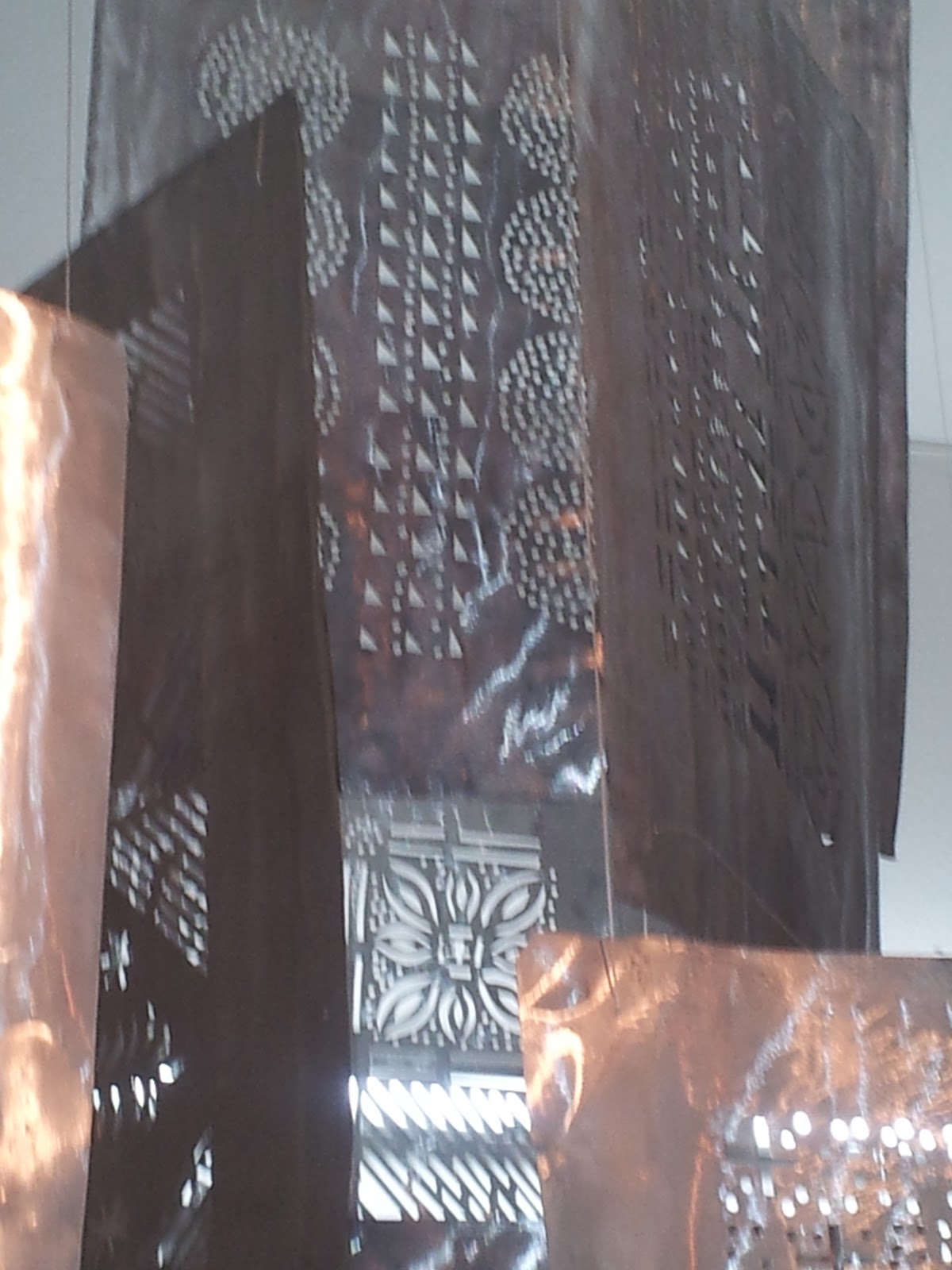
Convergence, 2011. Dimensions Variable, Fishing Line, Circular Weights, Adire Metal Stencils.


Detail


Detail


Detail


Detail


Installation View


Entropy of State, 2010. 243.84cm x 121.92cm, Acrylic, Fishnet, Nails, Wooden Rings on Wood


Detail


Permeations, 2011. 243.84cm x 121.92cm, Acrylic, Metal Bowls, Mesh, Springs, Polyurethane, Empty Paint Tubes, Adire Stencils on Wood, etc.


Detail. Permeations